
How To Improve Your 2K Row Time: The Complete Training Guide
If you’ve ever completed a 2K rowing test, you’ll know one thing:
It’s brutal.
The 2,000-metre row is the benchmark distance used by rowing clubs, universities, national teams and indoor rowing competitions worldwide. It’s short enough to require high power output, yet long enough to demand exceptional aerobic fitness, pacing strategy and mental resilience.
Whether you’re aiming to break 8 minutes, 7 minutes, 6 minutes or simply set a personal best, improving your 2K row time requires more than simply rowing harder. The fastest athletes follow a structured rowing training programme that develops aerobic fitness, threshold power, VO₂ max and race-specific performance.
As a former World Indoor Rowing Champion, Personal Trainer, Coach and Oarsman of over 40 years, I’ve worked with athletes ranging from complete beginners to experienced competitors. One lesson consistently stands out:
The athletes who improve the fastest are rarely the ones who train the hardest. They’re the ones who train the smartest.
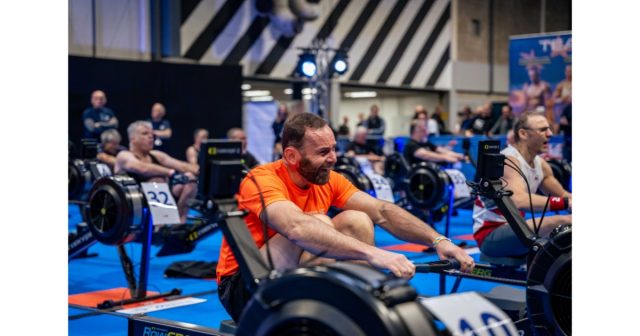
Why The 2K Row Is So Challenging
The 2K event sits in a unique physiological zone.
Unlike a marathon, which relies heavily on aerobic fitness, or a 100-metre sprint which relies almost entirely on power, the 2K requires both systems to work together.
Success depends on:
- Aerobic fitness
- Lactate threshold
- VO2 max
- Muscular endurance
- Strength and power
- Race pacing
- Technical efficiency
- Mental toughness
The challenge is that every athlete has a different profile.
One rower may have excellent endurance but lack power.
Another may have impressive strength but struggle to maintain pace in the second half of the race.
This is why generic training plans often stop producing results after the beginner stage.
The Biggest Mistake Most Rowers Make
Many athletes spend too much time training in the middle.
Not easy enough to recover.
Not hard enough to improve.
Every training session starts to feel like a race.
While this approach feels productive, it often leads to stagnation.
Effective 2K preparation requires purpose behind every session.
Every workout should have a specific objective within the overall training programme.
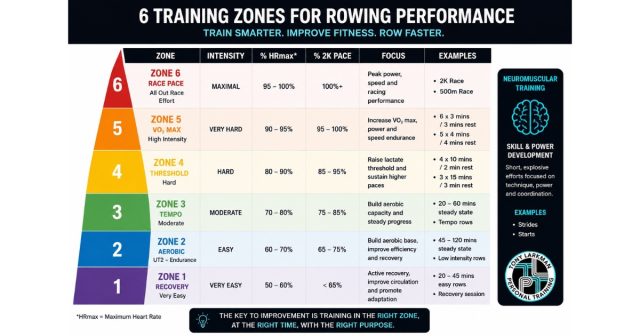
The Foundation: Zone 2 Training (UT2)
The majority of successful rowing programmes are built on a strong aerobic foundation.
Zone 2 training, often referred to as UT2 within rowing, develops the aerobic engine that supports all higher-intensity work.
Benefits include:
- Improved aerobic efficiency
- Enhanced recovery
- Increased training capacity
- Better fat utilisation
- Improved cardiovascular fitness
Many athletes underestimate the importance of this type of training because it doesn’t feel particularly hard.
However, aerobic development forms the foundation upon which faster rowing performances are built.
Without it, higher-intensity sessions become increasingly difficult to recover from.
Threshold Training: The Missing Link
Once a solid aerobic base has been established, threshold training becomes increasingly important.
Threshold work typically sits around Zone 4 intensity.
These sessions help improve your ability to sustain a high pace while managing lactate accumulation.
For many athletes, improvements in threshold fitness can produce significant gains in 2K performance.
The exact volume, frequency and progression of threshold work will depend on the athlete’s physiology, training history and competition goals.
This is where individualisation becomes essential.
VO2 Max Training: Raising Your Ceiling
If threshold training teaches the body to sustain a high pace, VO2 max training helps raise the ceiling altogether.
Zone 5 training targets maximal oxygen uptake and develops the ability to perform at very high intensities.
These sessions are often physically demanding and require careful integration within the broader training plan.
Too little and progress may stall.
Too much and recovery becomes compromised.
The art lies in balancing these sessions with lower-intensity work.
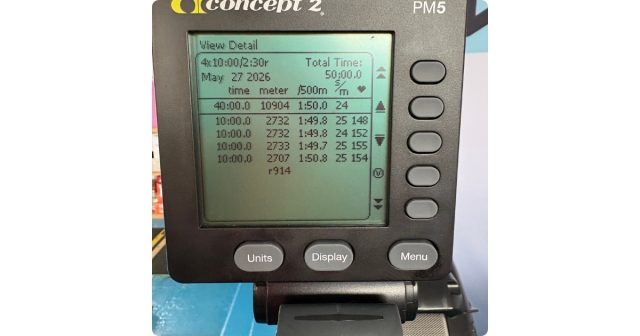
Race Pace Training: Preparing For The Real Event
As competition approaches, race-specific sessions become increasingly important.
The goal is to teach the body and mind exactly what race pace feels like.
Many athletes make the mistake of introducing race pace work too early or performing too much of it.
Race pace training is highly effective when appropriately timed within a periodised programme.
The closer you get to competition, the more specific your training should become.
The further away from competition, the more emphasis should be placed on developing the underlying physical qualities that support performance.
Why Strength Training Matters
Many rowers think rowing alone is enough.
In reality, strength training often plays a critical role in performance development.
A stronger athlete can typically produce more force per stroke.
The challenge is identifying what type of strength training is appropriate.
This is where age, training history and physiology become important.
For example, as I’ve progressed through my own athletic career, maintaining muscle mass has become increasingly important.
As we age, resistance training and hypertrophy work can help offset age-related muscle loss while supporting rowing performance.
A younger athlete may not require the same emphasis.
Their priorities may instead focus on maximising power development or increasing training volume.
The same programme is unlikely to produce optimal results for both athletes.

Why One Size Doesn’t Fit All
One of the biggest misconceptions in rowing is that everyone should follow the same programme.
This simply isn’t true.
Every athlete responds differently to training.
Some athletes maintain fitness easily but lose strength quickly.
Others maintain strength naturally but require greater focus on aerobic conditioning.
Some recover rapidly from high-intensity sessions.
Others need more recovery between demanding workouts.
Even athletes with identical 2K times can require completely different training approaches.
When I design programmes, I consider:
- Age
- Training history
- Recovery capacity
- Strength profile
- Aerobic development
- Competition schedule
- Lifestyle commitments
- Performance goals
This individualisation becomes increasingly important as athletes move beyond the beginner stage.
The Importance Of Periodisation
One of the most overlooked elements of rowing performance is periodisation.
Periodisation simply means organising training into phases, each with a specific purpose.
Different phases focus on developing different physical qualities.
Rather than trying to improve everything simultaneously, training emphasis changes throughout the year.
This allows athletes to:
- Build fitness systematically
- Avoid burnout
- Peak for important competitions
- Improve recovery
- Continue progressing long term
Without structure, many athletes end up training hard year-round and never reach their true potential.
How Beginners Should Approach Training
For beginner rowers, a structured foundation programme is often enough to produce significant improvements.
The focus should be on:
- Learning proper technique
- Building aerobic fitness
- Establishing consistency
- Developing strength
- Improving movement efficiency
At this stage, generic frameworks can work reasonably well.
The biggest gains often come from simply training consistently and avoiding common mistakes.
When Bespoke Coaching Becomes Essential
As performance improves, progress becomes less straightforward.
Athletes often reach a plateau where doing more work no longer produces better results.
This is typically the point where personalised coaching provides the greatest value.
A tailored programme can identify:
- Limiting factors
- Recovery requirements
- Appropriate training distribution
- Competition preparation strategies
- Individual strengths and weaknesses
Rather than guessing what might work, training becomes targeted and purposeful.
Final Thoughts
Improving your 2K row time isn’t about finding a magic workout.
It’s about developing the right physiological qualities at the right time, in the right amounts while allowing adequate recovery.
Aerobic development, threshold work, VO2 max training, strength training and race-specific preparation all have their place.
The challenge is knowing how to combine them effectively for your individual needs.
The reality is that no two athletes are the same.
What works brilliantly for one rower may be completely inappropriate for another.
That’s why the most successful programmes are not copied from the internet—they’re built around the athlete.
If you’re serious about improving your 2K performance, whether you’re chasing your first benchmark or preparing for competition, a personalised training programme can help you progress faster, recover better and achieve your full potential.
Frequently Asked Questions About Improving Your 2K Row Time
How can I improve my 2K row time?
Improving your 2K row time requires a combination of aerobic fitness, threshold training, VO₂ max development, strength training, race pace preparation and adequate recovery. The most effective programmes are structured and individualised to the athlete.
How long does it take to improve a 2K row time?
Most athletes see measurable improvements within 6–12 weeks of structured training. Progress depends on your starting fitness, experience level, recovery capacity and consistency.
What is a good 2K rowing time?
A good 2K rowing time varies according to age, sex, body weight and experience. The most important benchmark is continuous improvement against your own previous performances.
How often should I train for a 2K row?
Most rowers benefit from 3–6 training sessions per week. The ideal frequency depends on your goals, available training time and ability to recover between sessions.
Does strength training improve rowing performance?
Yes. Strength training can increase force production, improve power output and support better rowing performance. For masters athletes, it can also help preserve muscle mass and maintain overall athleticism.
What is the best heart rate zone for rowing fitness?
There is no single best zone. Successful rowing programmes use a combination of Zone 2 aerobic training, threshold work, VO₂ max intervals and race-specific sessions to develop all aspects of performance.
Should I do race pace sessions all year round?
Not usually. Race pace training becomes more important as competition approaches. Earlier phases of training often focus more on aerobic development, strength and threshold work before introducing more race-specific sessions.
Why do some rowers improve faster than others?
Every athlete responds differently to training. Genetics, age, recovery capacity, training history, lifestyle and physiology all influence how quickly someone improves and what type of training works best for them.
Is one rowing training plan suitable for everyone?
No. While generic plans can work for beginners, more experienced athletes usually benefit from a personalised approach. Individual factors such as age, physiology, recovery needs and performance goals should influence programme design.
Can athletes over 50 still improve their 2K row time?
Absolutely. Many masters athletes continue to achieve personal bests well into their 50s, 60s and beyond. Success often comes from balancing fitness development, strength training and recovery more carefully than younger athletes.
Ready To Improve Your 2K Row Time?
If you’d like a personalised indoor rowing programme designed around your physiology, experience level, goals and lifestyle, get in touch today.
Together we’ll build a plan that helps you row faster, train smarter and unlock your next personal best.